
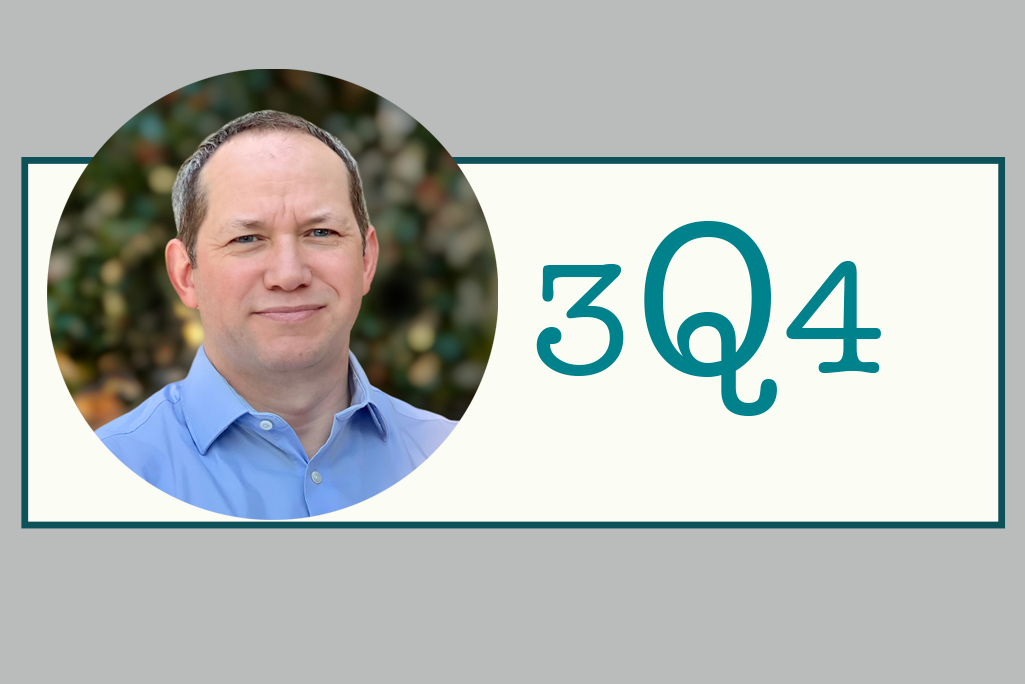
Alistair Rogers, Director of the Climate and Ecosystems Sciences Division, brings a dual perspective to his leadership role, that of an administrator and a practicing scientist. A plant physiologist by training, Alistair has focused his recent research on understanding and improving how plants are represented in Earth system models, work that has taken him into the field and around the world.
For Alistair, fieldwork is more than a research methodology. “Fieldwork is often physically and mentally challenging,” he shares. “Perhaps because of that, it tends to reveal strengths and weaknesses in culture and character, including my own. Through my fieldwork experiences, I have gained a deeper appreciation of the importance that respect and trust play in creating a culture that enables productive and rewarding field experiences.”
In this interview, Alistair shares how his experiences have shaped an approach to science and culture that emphasizes the Stewardship values of Trust and Respect.
Could you share your role as WSEC Executive Sponsor, your experience in this position, and how you support WSEC’s mission?
When I joined Berkeley Lab I recognized the central role that Employee Resource Groups play in shaping our culture, and also the importance of being part of that community. I was already working outside the Laboratory with a group of women scientists to improve workplace culture, so joining the Women’s Support and Empowerment Council ERG was a natural choice. Shortly after I joined, [former Engineering Division Director] Henrik von der Lippe retired and stepped down from his role as an executive sponsor of the WSEC. I agreed to replace him and joined Carol Burns, as one of the two sponsors. In that role, I support the WSEC primarily by acting as a sounding board for their ideas, and by providing advice on the annual charter. What many people might not appreciate about the WSEC is that the work they do, particularly on policy, benefits the entire Laboratory community.
Stewardship defines Respect as “taking responsibility for the belonging of others.” How do you support WSEC in fostering a sense of belonging in high-stakes technical or leadership spaces?
I ensure awareness, and transparency, surrounding opportunities for new responsibilities, leadership, and service. Often, leaders will tap people for new roles without a full understanding of who might be qualified or who might have an interest in the position. In our Division, opportunities are advertised broadly to give everyone—including women—the chance to declare interest. By openly sharing these opportunities, I am also trying to communicate that everyone belongs.
Building trust relies on transparency and accountability. How do you approach challenging situations to create an environment where everyone feels supported and heard?
Brené Brown coined the phrase “clear is kind” and it is central to my approach to difficult conversations. I like to ensure I start the conversation on a sound footing by fact-checking my observations and giving the person the chance to explain their understanding of a situation. When appropriate, I like to frame the conversation as a joint attempt to solve a problem. I aim to communicate honestly and directly; it’s uncomfortable, but clear is kind, and skirting an issue or sugar-coating it is not productive. I also recognize that we are all learning, all the time. Giving people the opportunity, and safety, to understand the negative impact of their behavior, and correcting it, is important. Finally, agreeing upon a path to a solution, providing support, and following through — the accountability part— is critical.
Women’s History Month honors those who paved the way before us. How can we steward that legacy by building systems and practices grounded in respect and trust that create lasting impact for the next generation of women scientists and professionals?
Groups who may not be as well represented in science can face obstacles, either as students or professionals, which can contribute to them leaving science. This is a personal loss for those individuals, but also a loss for science. We can honor those pioneers and steward their legacy, both by building better institutional systems, so the same obstacles do not have to be navigated over and over again, but also by addressing culture. Obstacles such as disrespect, if tolerated, become part of our culture and cause people to leave. At Berkeley Lab, stewardship—starting with respect and trust—defines how we should show up at work. Our challenge is to practice it, operationalize it, and make it part of how we are measured. In short, we need to work together to advance the culture we all want to see.
Learn more about Stewardship at Berkeley Lab
Learn more about the Women’s Support and Empowerment Council (LDAP required)
