
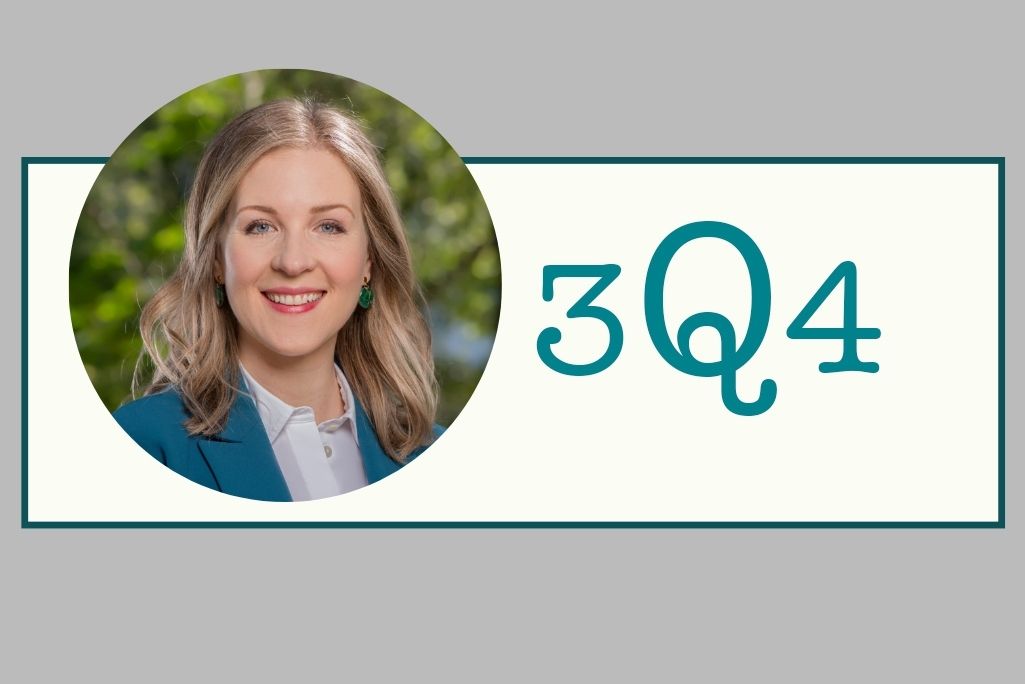
What inspired you to pursue this career? What was your career path to the Lab?
My parents would say my career ambitions started early as a kid, with a relentless interest in negotiating rules and limits, and a constant preoccupation with fairness and justice. I was one of four kids, so of course, equity and justice were not always possible. Occasionally, my dad would let me convince him of what I thought was best, and I remember him telling me I would make a great attorney. Then I saw lawyers on TV, and something about seeing a sharp-looking person in a suit fighting for what’s right in a courtroom really appealed to me. Obviously, that’s not how legal practice actually goes most of the time, but that was part of the draw for me as a kid who was interested in theater and the arts. I think I was set on becoming a lawyer pretty early on in my life, and the idea just stuck with me.
Coming out of law school, I wanted to practice environmental law because I saw that as an interesting area of law that was rapidly growing, and also an area where I thought I could achieve impact and move the needle on some of the more pressing issues of our time.
I did a postgraduate fellowship at the Oakland City Attorney’s Office where I did land use work, which typically involves managing how people use their property and evaluating and approving development projects. The Lab is actually exempt from those kinds of municipal approvals, but in that role, I learned the ins and outs of the California Environmental Quality Act (CEQA), which is definitely a regulatory driver at the Lab. After that stint, as a second-year lawyer, I went to a small boutique environmental law firm in San Francisco and stayed there for nine years. I found a great home in that law firm and received incredible hands-on training from excellent attorneys. We litigated big cases, and I learned to navigate and advise on complex regulatory issues under state and federal laws. Over the years, I took on more and more responsibility, and in 2022, I became an equity partner.
Eventually, though, I realized I wanted to do something with greater impact. I had diverged from what had originally brought me to the profession. I was representing good clients and doing good legal work, but I was not one of the few environmental lawyers fighting climate change in the courts or doing other “needle-moving” legal work on the big environmental issues of our time. The reality of environmental law is that, if you’re in private practice, you’re probably helping companies comply with existing regulatory regimes, which are very technical and regulatory, and the cases you’re litigating are typically about who should pay to clean up a contaminated property. When I interviewed for this position, I was struck by the Lab’s values, and “Stewardship” in particular. I realized how awesome it would be to work in an organization driven by stewardship as a value in itself — to take care of what we have for its own sake, not just because it’s legally required.
Having been in the environmental law space for nine years, I felt increasingly compelled by the pressing concerns of our time, especially climate change and environmental justice issues. I saw the importance of science in my work, as my litigation and compliance work were both driven by science. Environmental litigation in particular often comes down to a battle of the experts, and lawyers have to tell a science story of some kind to the judge or jury. Over time, it became clear to me that science is not only the key to the cases I litigated, but more importantly, it’s our best hope of solving the major issues we’re facing as a society today.
When this job came up, I wasn’t looking to make a career change, and I confess, I didn’t even know about the Lab at the time. I started reading and was blown away by the things the Lab does and the kind of impact and variety I could have in this role. I immediately saw this job as a once-in-a-lifetime career opportunity.
I enjoyed practicing environmental law and litigating cases, and I think I made a good run of it in private practice. But I was ready to broaden my skills and do something more aligned with my values and contribute to a mission that was exciting on a personal level for me. The Lab is everything I thought and hoped it would be. I’ve been really happy here in the year and a half that I have been here.
Can you share a little bit about your role at the Lab and how you support the Lab’s mission?
My title is Principal Counsel, Environmental Law, which speaks to my area of specialty and expertise. Any environmental matters arising at the Lab fall squarely within my jurisdiction. I support EHS, but I also do a lot more than that.
As one of four general law attorneys in the Office of Laboratory Counsel, we collectively manage a broad range of issues that often fall outside our individual portfolios. Over the past year, I have worked on employment law, HR matters, policy development, and disability rights, among others. Our office is frequently called upon to provide legal guidance on complex operational challenges and sensitive personnel situations.
A huge part of my role is problem-solving. I often find myself advising on operational issues with legal dimensions, so my goal is to be not only a trusted advisor to my clients around the Lab but also an effective business partner. I ask questions, spot issues, and together we think through solutions that comply with legal requirements and meet our business needs in this quickly evolving environment.
What are some things you enjoy about your role and why?
I love the variety and the wide range of issues that cross my desk. Given the breadth of our operations, there are always interesting legal issues to navigate, which means no two days are alike. I also love our Office of Lab Counsel team. We have a terrific boss and mentor in Therese Leone, and that makes all the difference in the world. Beyond the work itself, I am deeply inspired by our mission. I enjoy reading Elements and staying informed of all the groundbreaking research happening here. It is incredibly rewarding to be part of an organization bringing science solutions to the world, and I take pride and joy in that.
What advice would you give someone looking to pursue the same career as you?
Be prepared to work hard, and take care of yourself along the way. While this career path is highly rewarding, it’s not an easy one. Lawyers often struggle with maintaining work-life balance and protecting their mental and physical health against the stresses of the profession. It helps to be intentional about developing good stress management habits and a thick skin in your first years of practice. So much of what you need to know as a lawyer is not actually taught in law school. Do your best and be diligent, but don’t expect to be perfect. The most successful people I’ve seen are the ones who learn from their mistakes but aren’t tormented by them. My boss, Therese, has been really instrumental in helping me see that making mistakes is a necessary part of learning. Learn what you need to learn and keep moving.
We are also at a pivotal moment with the rapid rise of AI, which is quickly transforming so many industries, law included. Like other professionals, lawyers must keep adapting and making use of all emerging tools responsibly. Lawyers and non-lawyers are increasingly using AI to get the legal answers they seek (right or wrong), so that will change traditional workflows and require us to double-check everything and be intentional about adding the value that only human beings can bring — professional judgment, empathy, trust, etc. I may be optimistic, but I don’t think lawyers will be easily replaced by generative AI because so much of what we do involves our professional judgment, and we’re accountable under professional rules of ethics. You don’t get that with AI. To future-proof ourselves, I think lawyers and other professionals will need to lean into our critical thinking, real-world problem-solving skills, and our communication and interpersonal skills.
Anything else you’d like to add?
A friend of mine who worked at a university (not UC) often complained about how annoying it was to work with university counsel, how they slowed everything down and were always telling him no without proposing solutions. It’s a shame he had that experience because a good lawyer is a valuable resource when things get difficult. Obviously, we’re not the ones to call in a literal emergency, but we can help you think through issues, brainstorm potential solutions, and understand the various interests at play in a dispute.
I see my role at the Lab as very service-oriented. I’m here to help colleagues solve problems and advance the incredible mission of this Laboratory. Our office is often brought in when circumstances are challenging or uncertain, and we do our best to bring solid legal guidance and strategic leadership to tricky situations. I am deeply grateful for the opportunity to use my background and skillset to advance our shared mission and ensure the best outcomes for our organization, alongside my colleagues who are each doing the same in their own ways.
To learn more about the Office of Laboratory Counsel, visit olc.lbl.gov.
