
 The Hayward Fault, which passes right next to the Lab’s hillsite, is one of many earthquake faults in Northern California. Any of the faults, at any time, can give way, releasing tremendous energy capable of transforming the landscape and lives.
Sign Up for LabAlert
LabAlert is the premiere communication method in the initial phase of an emergency. Sign up for LabAlert for your personal mobile device. Updated event information will be added to status.lbl.gov. LabAlerts go to the entire database, meaning you may occasionally receive a LabAlert that is unimportant to you. However, it is an important enough message to rise to the level of a LabAlert.
“Planning is step one in preparing for an earthquake, followed by practice,” said David von Damm, Division Director, Security and Emergency Services. “I consider everybody at the Lab to be part of the emergency management team because when a building needs to be evacuated, we need everybody to know where the emergency exits are, where the assembly area is located, how to check in on your phone for accountability, and how to receive emergency communication.”
“As part of the day-to-day operations at the Lab, we’re looking at ways to change how people react to drills and real emergencies. I think the hybrid work environment, where sometimes we’re in the office, and sometimes at home, may have desensitized us to building alarms or knowing where our emergency assembly areas are,” said von Damm.
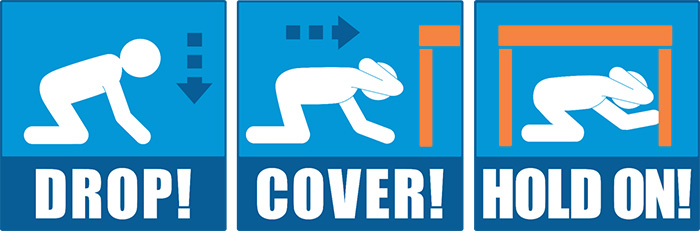
On Thursday, when you receive a LabAlert that the drill has begun:
- Drop.
- Cover by taking shelter under something sturdy, such as a desk or table.
- Hold on to the object so you can move with it if it moves during an actual earthquake.
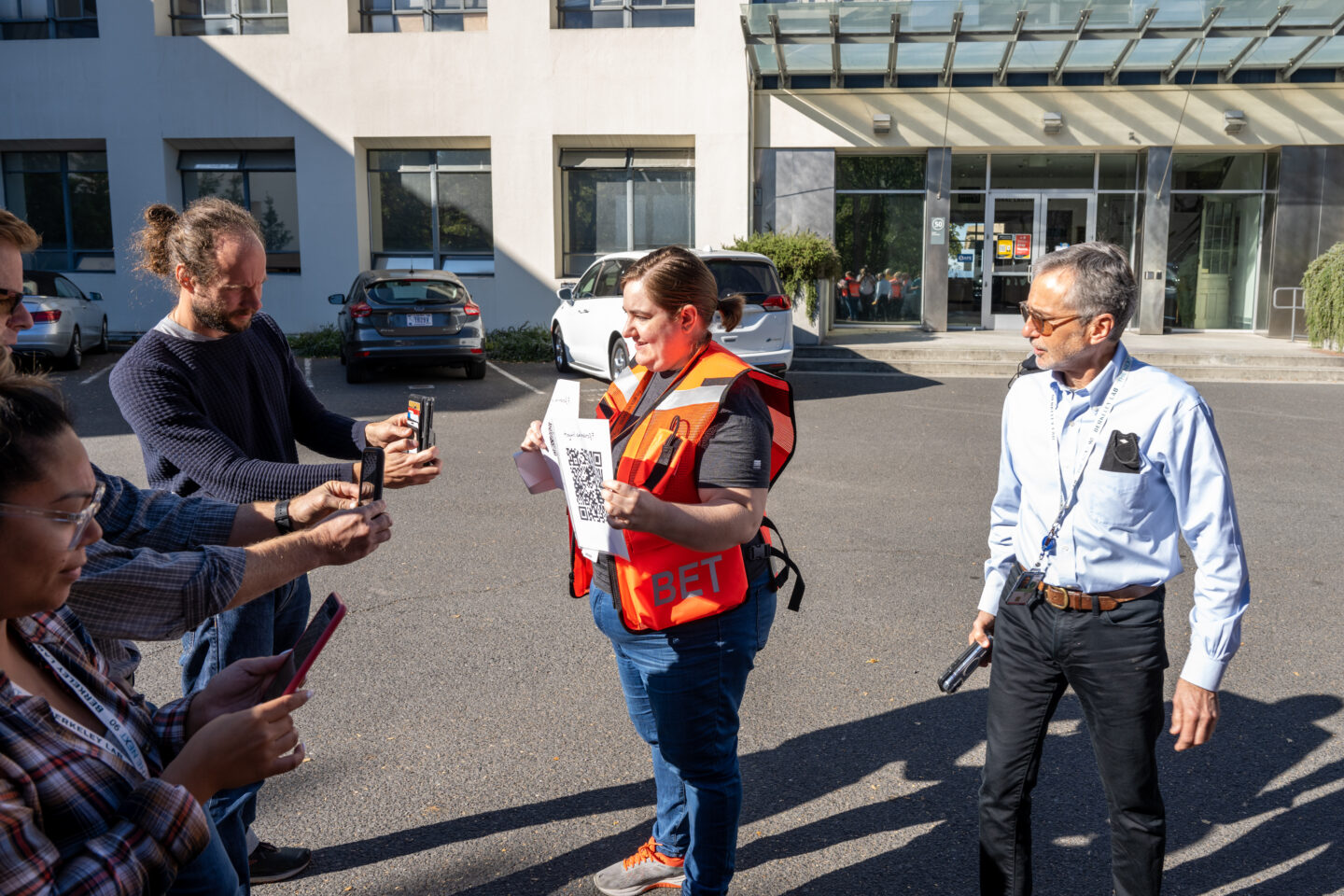
After a few minutes, a second LabAlert message will instruct you to gather at the nearest Emergency Assembly Area (EAA). Grab your phone, wallet, and keys if you can do so safely. Use the QR code on the EAA sign to check in. Once you have done that, you are free to return to work. Read more about the drill.
