
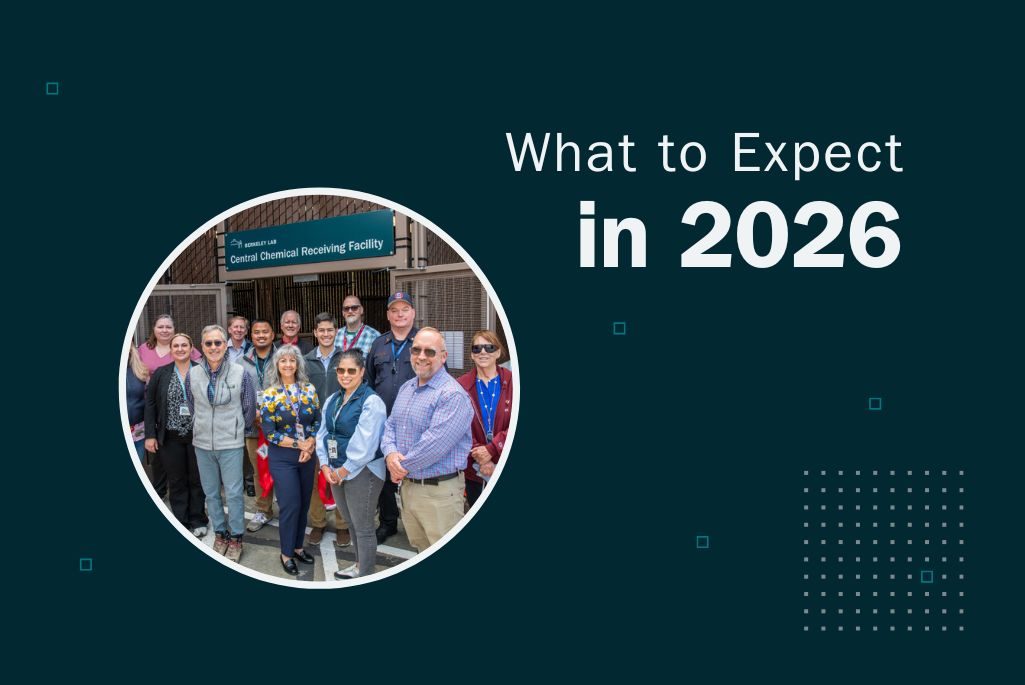
This is one of several interviews in a series about the changes we can expect at the Lab during 2026.
What are EHS’s major projects for 2026?
We have several major EHS projects, with our top initiatives specifically designed to enhance support for the research divisions and improve our capacity to help them.
First is the new Visual Survey Data System (VSDS) application, which is expected to be in use in the field by the third quarter this year. The VSDS is a tablet-based survey form for our radiation protection technicians that aims to digitize routine surveys, reducing manual data entry and paper signatures. This will save time and allow our technicians to spend more time directly supporting researcher requests. The challenge is the time-consuming initial setup, which includes digitally mapping all items (benches, equipment) within each area’s electronic survey form. Once complete, these layouts will enable faster surveys, freeing up time for the technicians to spend elsewhere.
Next, we have the response to the Integrated Safety Management (ISM) review in research. Last year, we had a successful joint assessment with the Lab and the Berkeley Site Office (BSO) to review ISM at the bench, with great results. This year, we will collaborate closely with our research partners to integrate and refine ISM practices in a practical and useful way.
We are also advancing work on self-driving labs, reflecting the Lab’s focus on robotics and automation in research. We formed an internal working group of research and operations staff, led by researchers, to review current automated research at the Lab, identify necessary support to be agile, and determine how support groups like ours can help ensure safety and productivity. We are grateful for the research staff driving this effort and are excited by the progress made.
Lastly, we are continuing to streamline Work Planning & Control (WPC) Level 3 activities, which are challenging due to their extensive scrutiny and review. We are actively seeking ways to simplify the processes, especially for activities that are the same year to year with only minor administrative or no substantive changes. For example, we are reviewing the necessity of involving many people in approving unchanged items. We are implementing systematic changes in response to researcher concerns, aiming for collaborative solutions that benefit both Research and Operations.
What other initiatives would you like to highlight?
In addition to these four major efforts, the ALS upgrade project (ALS-U) remains our highest overall priority. Our goal is to provide the best support we can and ensure high safety standards while maintaining maximum flexibility. We are deeply engaged with the ALS-U project team, and the work there demands a full-court press from all areas within EHS. Not only are our Radiation Protection subject matter experts (SMEs) heavily involved with shielding design support and helping to plan for future Accelerator Readiness reviews, but our construction safety team is engaged to help ensure Lab processes are in place so everyone remains safe on the job. Our electrical safety SMEs continue working with the ALS-U engineers, providing code guidance and performing technical reviews and inspections.
But that’s not all! Other areas of focus for EHS include collaborating more closely and providing more support to the NERSC upgrade project team, as well as supporting the Projects & Infrastructure Modernization Division (PIMD) with both the Linear Asset Modernization Project (LAMP) and the completion of Collaboration Commons. Additionally, we will be supporting the expansion of our work in several key research areas. This includes a possible new work scope in chemistry and continued activities at the 88-Inch cyclotron in readiness for the element 120 project, and research involving pesticides in the Biosciences Area.
Also, the Aviation Safety Program, particularly Unmanned Aerial Systems (UAS), now requires significantly increased effort and rigor and is beginning to impact areas beyond traditional Environment, Safety & Health (ES&H) requirements and the EHS Division. This heightened scrutiny is driven largely by statutory requirements under the National Defense Authorization Act (NDAA) and the American Drone Security Act (ADSA). As a result, the Lab must apply substantially greater rigor to UAS justification, procurement, approval, security, and operational controls. UAS operations are now treated as high-risk, high-visibility activities, with compliance inseparable from EHS oversight and institutional risk management.
Another new focus this year is improving our representation in the DOE’s Performance Evaluation Measurement Plan (PEMP) report. In my five and a half years at the Lab, we have consistently received an A- in the ES&H category. While our Division has historically led this reporting, we are now seeking input from all research areas and divisions on their environment, health, and safety activities to finally achieve the A we deserve. Including this information will provide DOE with a more comprehensive picture of our safety culture, which is among the best I have seen in my career, and allow us to collectively take credit for our contributions.
What excites you about these projects?
I am most excited about the VSDS project. Although it uses proven rather than new technology, we expect it will save our radiation technicians several hours each week in preparing documentation, allowing them to focus on other important activities. Ultimately, this enhanced efficiency will allow us to provide better support to the Lab, which is exactly what we need.
The DOE report on our ISM implementation at the bench level was also very positive. The recommendations we received will help enhance our researchers’ work and improve overall safety. This initiative will help us work smarter, not harder, by making small adjustments to keep ISM a priority, without creating additional workload.
Shifting to self-driving labs, the emergence of new technologies such as these introduces new risks. Learning from past experiences, we now seek to collaborate with Research to anticipate and prepare for potential issues and develop effective responses. This shared effort will enable us to better support researchers, who in turn can help inform our priorities as we navigate this growing technological area together.
With the WPC, we are continuing to streamline our processes by reducing administrative burden for staff and making reviewing and signing WPCs easier for workers. We are using feedback from researchers to guide our systematic review and implement thoughtful changes that benefit both the research community and our division.
How will EHS address the challenges that come from these projects?
In 2026, the primary challenges will be the unknowns that we face, rather than existing projects. As a small organization with broad responsibilities across the Lab, success hinges on achieving consensus and having a shared understanding across all of our efforts.
How does EHS partner with Research on large and small projects?
Our approach to partnerships is tailored for each project and initiative. As much as we view our research counterparts as partners, they are also our customers, and given our limited staffing, we must customize our support accordingly. We currently engage with researchers through various channels, including the Safety Advisory Committee, the Division Safety Council, and direct outreach, and we have subject matter experts in most areas.
EHS is a vast and complex organization, and no single person is an expert in everything. Therefore, our response will vary based on the complexity of an issue, our staff size, and the time investment necessary.
Our intent and hope is that researchers will continue to reach out and partner with us. As an organization, we are always striving to be as transparent and as risk-balanced as we can be.
What accomplishments or progress are you most proud of in the last few years?
Two key successes stand out, reflecting a strong year for EHS and the Lab as a whole. The implementation of our chemical management system is a major accomplishment. This was the culmination of a years-long, concerted effort that I take immense pride in, and the success of this initiative was made possible by an exceptional team dedicated to the project.
I am also proud of our PROActive Review (Peer Review for Operational Advancement) response. A recent PROActive review chartered by DOE examined both operations and research and identified four overarching areas with minor issues, all of which we were already addressing. Compared to other national laboratories, we performed exceptionally well, and it’s a success that the entire laboratory can and should take credit for because, at its core, this review looked closely at our safety culture.
