
This is one of several interviews in a series about the changes we can expect at the Lab in 2026.
Parking at the Lab’s hillsite can be challenging, but big changes are on the way to create a more efficient and smoother experience. Elements sat down with Senior Manager of Transportation and Parking Demand John Chernowski to get the details on upcoming changes in 2026, including updates to our shuttle system, new parking reservation platforms, and more.
What are the major Transportation and Parking Demand projects for 2026?
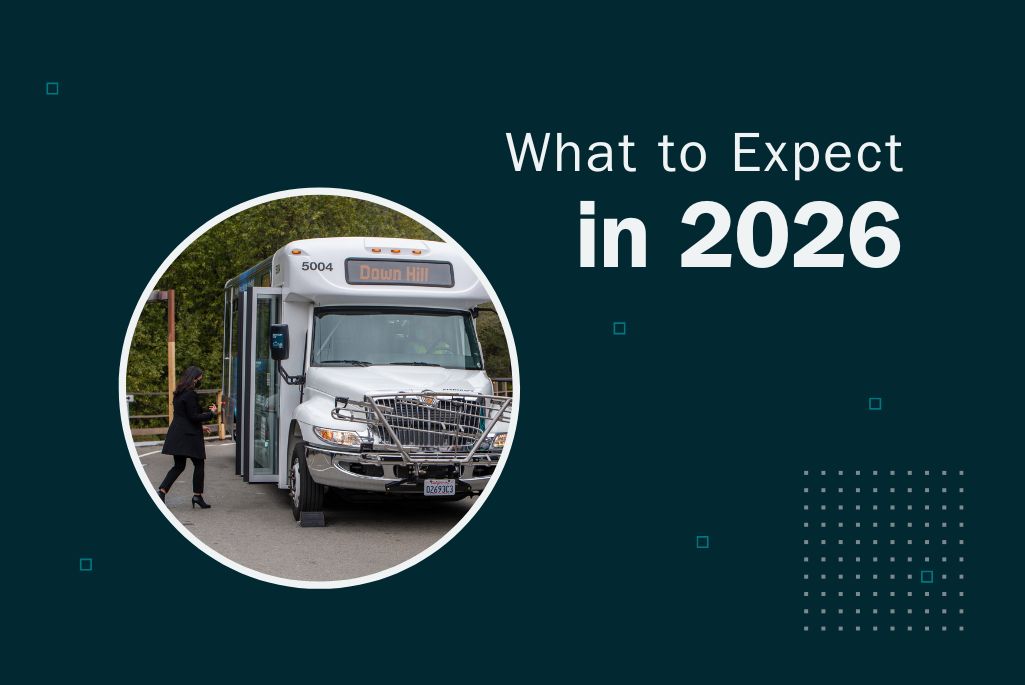
We will be renewing our shuttle contract to maintain our current service and transition in the second quarter of the fiscal year. Our goal is to set us up for success once the Welcome Center opens and ideally redesign our shuttle routes to have more efficient on-site routes than we have today. The Welcome Center will act as a central hub, and all off-site routes except for two will begin and end there. On-site routes will move people around the Lab more efficiently than we can today. Though it’s still 18 months down the road, the contract we’re lining up now is a critical step to getting us there.
Changes we’re making to support this transition include installing new shuttle shelters on-site, such as across the street from Buildings 91 and 92 and around Buildings 62 and 66, as well as considering a switch from TripShot to another navigation platform due to connectivity issues with the shuttles. This is still to be determined. We will communicate any changes in advance to make this as transparent for our riders as possible.
We are also revamping the commute website to increase user-friendliness and be a better resource for the Lab than it currently is.
We will continue our partnership with Ridepanda, which has been a great success story for the Lab. With over 40 active monthly leases, this partnership has reduced the number of cars in our parking lots, not to mention the benefits to the environment and to the neighboring communities with reduced traffic impact. Ridepanda also provides a nice package for users, including a helmet, lock, and theft protection.
We are also looking to expand our partnership with Scoop, our carpooling partner. While we haven’t built a critical mass yet, we are exploring different ways to better engage the Lab community. Previously, the system required the Lab to send interested individuals an email invitation to join Scoop. Now, they can go to our website and sign up directly.
What changes can we expect regarding parking?
We are transitioning to a new platform for visitor parking and the staff and eligible affiliate reservation system to improve the user experience. There will be greater utility for the user, and it will improve enforcement because the new platform will be better integrated with the platform that Security & Emergency Services (SES) uses today. For visitors coming to the Lab, we will be moving to morning and afternoon slots. So if someone is coming to the Lab for two hours, the space won’t sit there unoccupied. We’re partnering with security on the best way to implement this once the programming is complete.
Moreover, we are also pursuing a technology to show available parking spaces for personal vehicles across the Lab. We’re just scoping this right now with respect to the business requirements and the budget, but it’s something that we’re looking to move towards in the next couple of years, at least on a pilot basis. Once we have the on-site routes in place with the shuttles, we can move people more efficiently. For example, you could park anywhere at the Lab and get to where you need to go within 5-10 minutes, certainly no more time than it would take you to park and walk to your office. That’s our vision.
What about the Site Impacts Map?
We will continue to support the Site Impacts Map, an excellent resource for checking what’s happening at the Lab before coming on-site. It allows users to search for impacts such as road changes, parking lot closures, gate closures, de-energized buildings, conferences, and more by location and date, extending several years out. We have a really good team in place working to improve and refine the resource.
How will these projects advance the Lab’s mission?
My mission is to provide various commute options for the Lab community to make their journey to the Lab as efficient as possible, including their on-site experience. All of these things are complementary in that we’re trying to provide more and better ways to come to the Lab and to reduce parking demand, for those who do choose to drive.
If we can work towards a new shuttle model over the next couple of years, we will be able to move people from off-site to on-site more efficiently and around the site more efficiently as well. We can also then get rid of much of our current on-site transportation, such as GEMS, which take up huge swaths of space and come with safety issues.
If I could partner that with the parking availability technology, now I’ve got a way to move you around, you’re not wasting time driving around looking for a parking space on site, and I can get you to where you’re going within 5-10 minutes. I think that’s a big win for the Lab community.
How is your division addressing the challenges that come from these projects?
Given the challenges we are facing budget-wise, we will likely have to make some hard decisions. Our focus will be on prioritizing initiatives that offer the greatest return.
We will continue to partner closely with our Projects & Infrastructure Modernization (PIMD) and Facilities Divisions to minimize the impact of necessary on-site construction and maintenance activities on parking to the greatest extent possible. The Lab is an area of high activity, so we work hard to reduce both the amount of parking space and the duration of time required for these projects.
A successful example of this partnership is the reduction in construction worker parking. Several years ago, the Lab provided parking to all construction workers, sometimes up to 300 per day on site. Working with PIMD, we reduced that number to less than 100 a day, with the rest of the workers using alternative transportation. The workers who park on site are restricted to specific areas, such as the Pit or their project lay-down space. While building new facilities is positive for the Lab, it inherently creates challenges and impacts. Our goal is to reduce the negative effects and highlight the positive outcomes.
What else should we look forward to in 2026?
We are working with Facilities and Campus Planning to improve our bike infrastructure and better support our bike community, such as improvements to existing shower facilities and possibly even covered bike parking around the Lab. It is budget-dependent, but we are having these conversations today.
We also have a couple of advocates for motorcycles and scooters in our Transportation Advisory Committee, and we will be looking at what we can do to promote these modes of transit while also understanding and addressing the safety risks inherent in them.
What accomplishments or progress are you most proud of in the last few years?
We have built a really strong shuttle system. Before the pandemic, we estimated that about a quarter of all people were coming to the Lab via our shuttles. By our estimates today, with badge-ins and shuttle data, that number has increased to over 30%. We’ve developed routes that are responsive to where our Lab community is, where possible, and have also worked hard on our reliability and our on-time performances, which are consistently over 90%. Maintaining this level of excellence will continue to be a major priority as we transition in the coming months.
I’m also proud of our efforts to create a more equitable parking policy over the past couple of years. Through a measured approach, we expanded our eligibility to new populations without exceeding our current parking supply. This is an ongoing, collective effort, and I want to acknowledge and thank our partners across the Lab.
