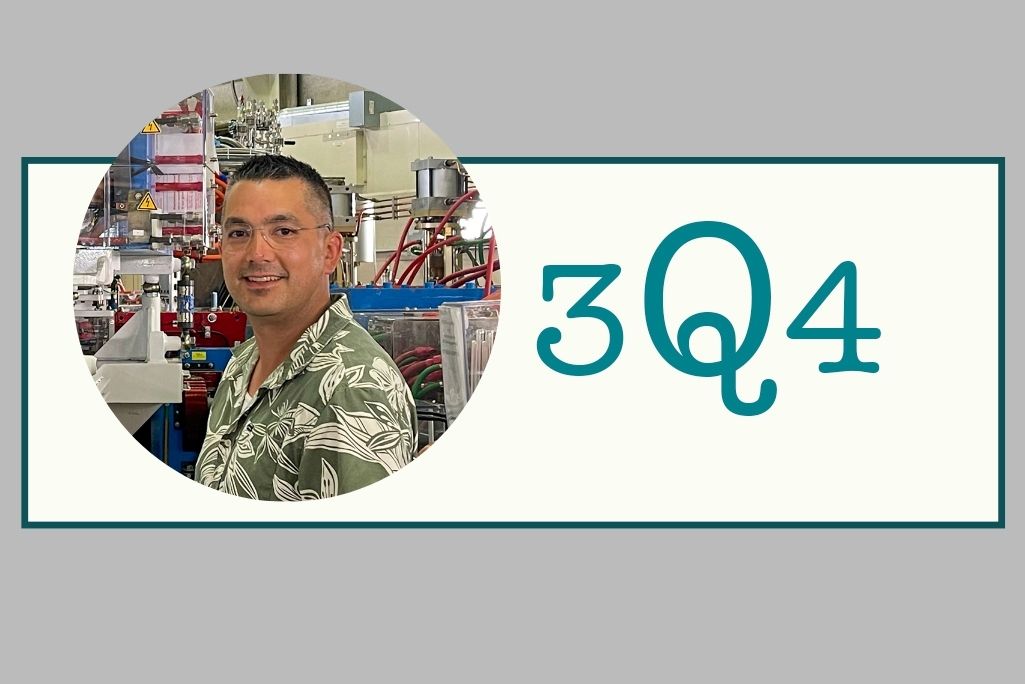
Born in Texas and raised in the Bay Area, Kyle McCombs has always had a connection to Berkeley Lab. His diverse career path, working in construction to a medical device company, eventually led him to his current role as the Advanced Light Source (ALS) Mechanical Technology Group Lead and Mechanical Engineering Technical Superintendent in the Engineering Division. In this position, he plays a crucial role in overseeing the technical aspects of accelerator systems and scientific beamlines, directly supporting the ALS upgrade (ALS-U) — an ambitious upgrade set to revolutionize the user facility’s x-ray capabilities and enable world-leading soft x-ray science for years to come.
In this interview, Kyle shares his journey to the Lab and some of the most exciting challenges of his work on ALS-U.
Q. Tell us about your current role at the Lab.
As group lead, my main role is to represent our team across all of the ALS-U subsystems, such as vacuum systems, magnets, weldments, support structures, prestaging, beam injection & extraction, beam diagnostics, electrical cabling & infrastructure, and removal & installation, which all work together to build the accelerator. In addition to this, we also support the existing accelerator and beamlines, as well as the new beamlines that will come with ALS-U. Our team also supports any Lab project that might need our support in our B77 technical areas. Between all of the different subsystems and other potential customers, we have weekly meetings to discuss upcoming work, vendor deliveries, and daily issues. I then schedule and coordinate with my team, aided by team work leads that help supervise our staff and lead our jobs.
It’s always a team effort, and we do our best every day to plan resources, provide tech support across ALS, ALS-U, and smaller projects. When I have time, I like to get into the trenches with the team to help mentor new technicians and see firsthand how things are going. Do we have everything we need? Do we have enough people? Is the job progressing as planned? Is everyone working safely and comfortably? That’s a summary of my day-to-day responsibilities.
Q. What drew you to mechanical engineering and to working at Berkeley Lab?
Twenty years ago, I was in construction in the Bay Area. I was finishing a construction project, building a custom home for one of our customers who had worked at Berkeley Lab in engineering. His name was Joe, and he was awesome. I was still trying to figure out if I wanted to continue in construction or explore other paths, and he laid out all the options for both directions. He was the president of a medical device company in Fremont, building X-ray tubes. I helped with their remodeling, building X-ray testing labs, and a machine shop. This led to engineering on the mechanical production side of those medical devices. After that, I just knew I loved engineering and started taking college courses.
During a furlough due to government budget issues, a coworker’s husband, Hans Bechtel, a beamline scientist at ALS, told me about a mechanical engineering opening here. I interviewed and got the spot 16 years ago. And here we are today!
Q. Was there a particular moment, person, or experience that inspired your career direction?
That’s a tough one because there are so many influential people. On the educational side, it was Hans Bechtel on the ALS beamlines. While I was still continuing my college courses, he would help me study sometimes after work, and I actually did really well in honors chemistry, thanks to his help.
My fabrication and assembly background comes from my time with John Pepper, working on beamline apparatus. This included mechanical design work and a lot of cryogenics, R&D, and testing.
For my engineering discipline, I learned so much from Mark Coleman, my boss and mentor in all things mechanical design-related. I had experience with CAD and making my own prints, but Mark taught me how to do it with an engineering mentality and a strong understanding of our engineering principles. I now help my team understand those same principles.
On the ALS mechanical technology group (AMTG) lead path, that was probably my old former boss, Dan Colomb, who was doing my job back then. I thought it was super cool how you could do multiple things in this position and turn concepts into reality, from fabrication and assembly to installation in the tunnel or on the beamlines of these awesome things we’re building. I also appreciated the ability to hire, train, and mentor new employees, watching them develop into valuable team members. Of course, I didn’t realize this back then, but a lot of how I manage so many things all happening at the same time with our large crew goes back to those days when Dan was doing it for us. These four individuals were pivotal in my journey.
Q. As the ALS Mechanical Technology Group Lead, what are the most exciting challenges you’re tackling as part of the ALS upgrade?
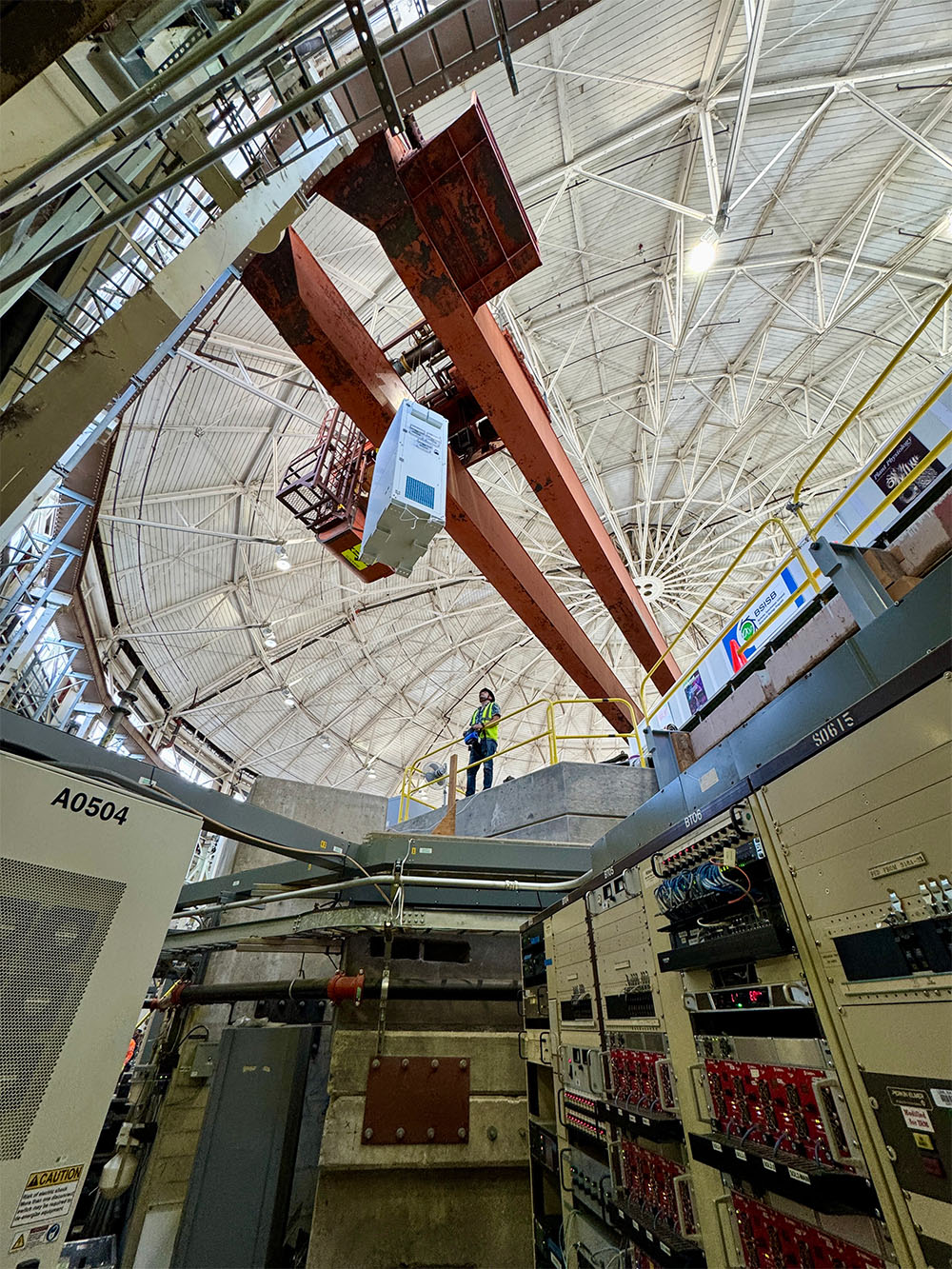
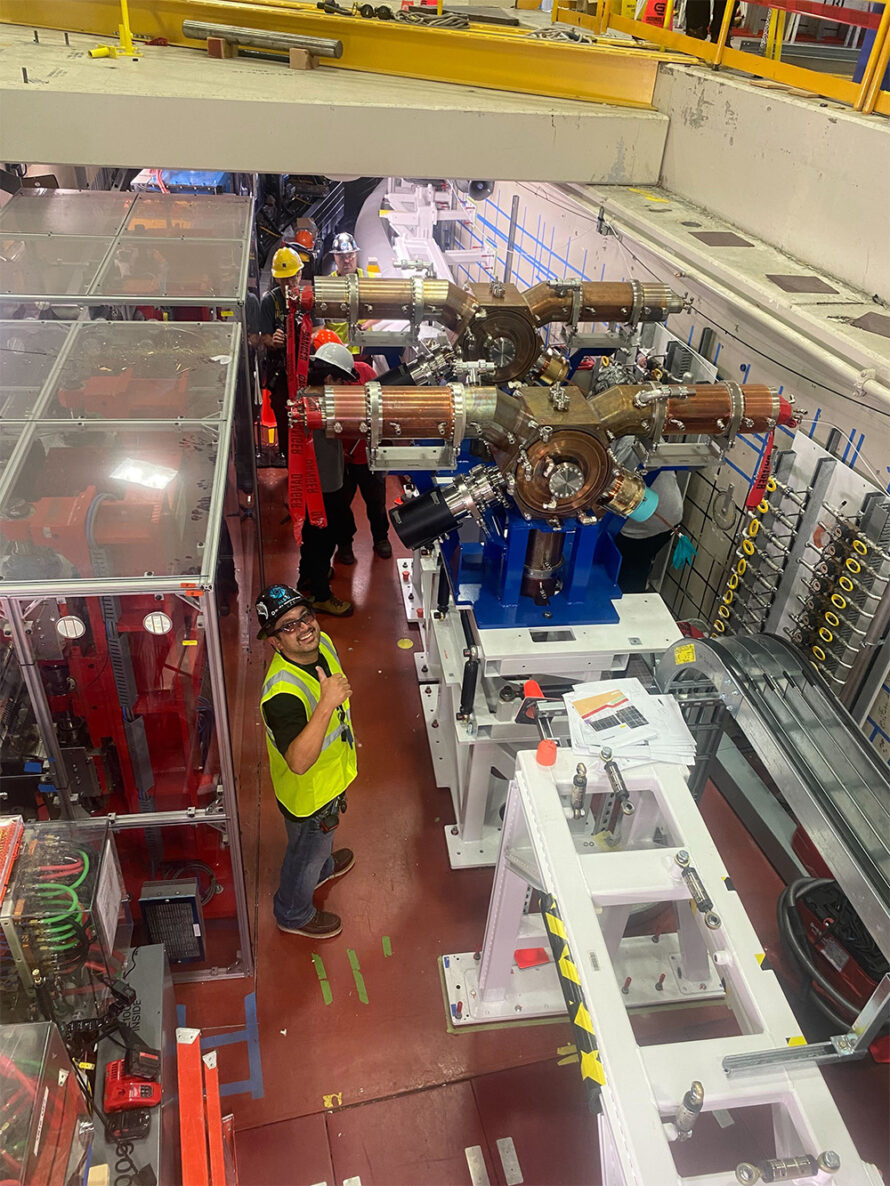
Installation of ABend power supplies needed to energize the Accumulator Ring ABend magnets in the tunnel.
Building the ALS-U accelerator is a dynamic challenge, requiring work across multiple Lab buildings. We have winter and summer shutdowns, plus bi-weekly two-day maintenance shutdowns, for installations and occasional demolition. Day to day, it’s kind of a constant intensity, which makes it both exciting and challenging.
This summer, we’re finishing the accumulator ring with just one difficult sector left, Sector 12, where both the accumulator and storage rings connect via transfer lines. Our team is now building the transfer line that will connect the booster ring to the accumulator ring, allowing us to shift focus to the new storage ring which is very exciting. Another challenge is staying on schedule for building this transfer line in B77, while also managing the shutdown schedule.
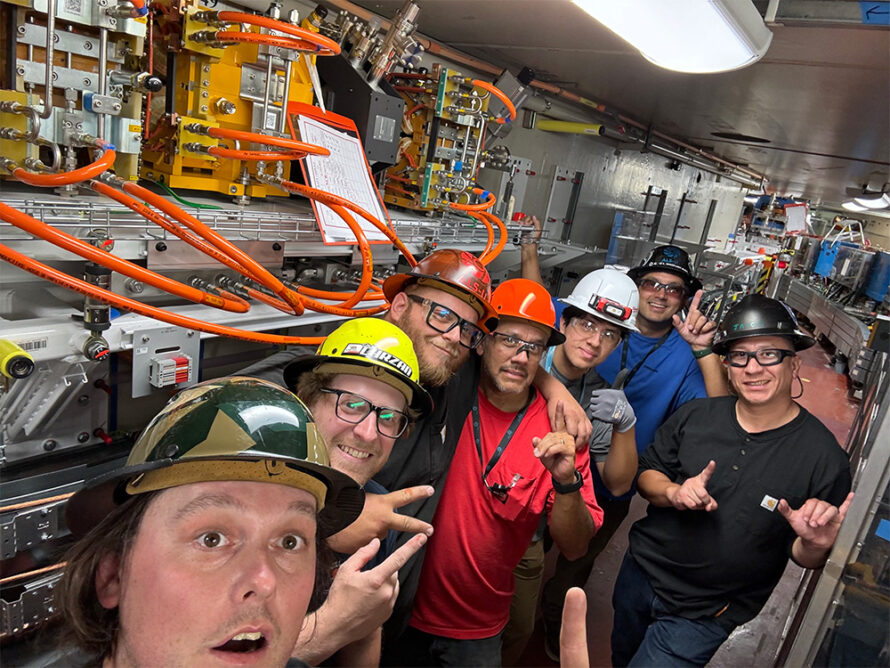
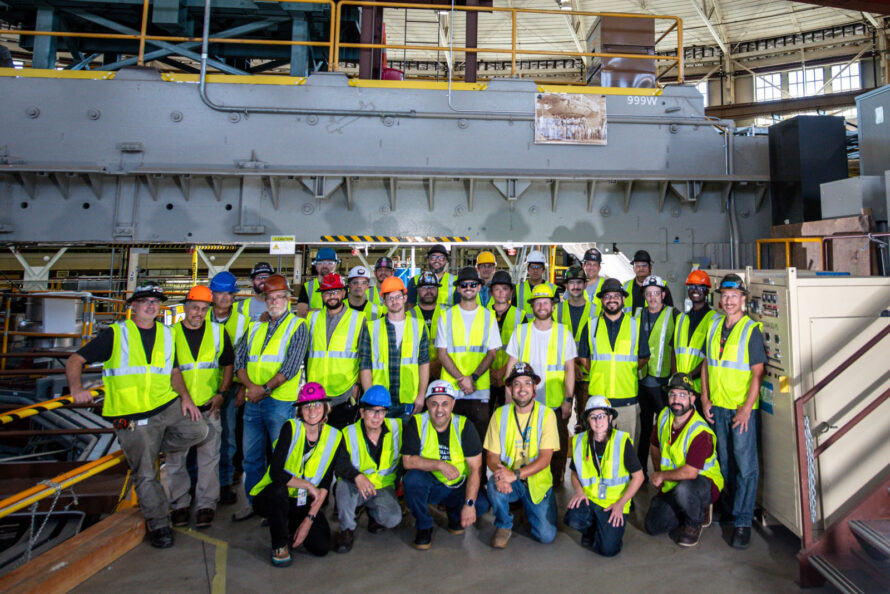
We pride ourselves on our creativity and flexible staffing, with our team growing to just over 30. We mentor, cross-train, and share knowledge as much as we can so that we’re more flexible with who can help, from magnets to vacuum chambers, instrumentation to diagnostic components, to steel weldments and more. It’s challenging but rewarding to see everyone come together. It’s a great feeling.
Q. The ALS-U is the most significant upgrade in the facility’s history. How do you see your work contributing to the Lab’s broader scientific mission, and what impact do you hope this upgrade will have on science at large?
It’s going to help the scientific staff push the boundaries of how they perform their research, especially in new materials and chemical systems needed to advance our energy research. As part of the Berkeley Lab family, we’re all proud that this accelerator will keep us at the forefront of the global scientific community.
On the engineering side, I’m personally looking forward to all of the cool projects that will come after ALS-U is completed. Right now, we’re focused on commissioning the accelerator and upgrading a handful of beamlines as part of this scope. That leaves most of the other beamlines open for future upgrades, along with some mechanical devices in the tunnel, over the next decade or more. A great example is our undulators, which are giant mechanical systems that manipulate the electron beam to produce specific types of light for users. From an engineering standpoint, designing and developing these advanced components is truly awesome. I am excited about the opportunity to see my team get a chance to work on these same types of components that I was exposed to in my earlier years at LBNL.
I’m like a kid in a candy store. I’m incredibly excited about all of the new engineering opportunities for new devices and upgrades!

Q. Is there a mantra or work philosophy that you hold to?
The ALS Mechanical Technology Group (AMTG) takes immense pride in being able to help identify and resolve bottlenecks. In any project we support, we understand that progress won’t always be smooth, with surprises or hurdles that can halt a project. Our team is dedicated to proactively stepping in to help. This might involve finalizing a mechanical design, setting up simple tests or prototypes, or troubleshooting custom equipment. It’s not explicitly in our job descriptions, but we volunteer our expertise to keep progress moving forward, and we view this role as a badge of honor.
Q. Any final thoughts?
One aspect that truly stands out and makes me proud is the immense collaboration behind a project as large as ALS-U. The ongoing cooperation across nearly every division at Berkeley Lab to bring this project to fruition has been remarkable. We’ve worked daily with Facilities, the Projects & Infrastructure Modernization Division, and numerous contractors and vendors. Many buildings have also been gracious enough to let us temporarily have space in their buildings for the project, including Buildings 71, 91, 92, 53, and even Building 62 for several years. I appreciate the Lab’s willingness to provide space for staging and building these components, especially given our ongoing space challenges.
Witnessing different groups across the Lab unite in this manner has been incredible. It’s been truly awesome to know that when the time comes, everyone can come together as one big team to accomplish something of this magnitude.

1 Comment
Team Science personified. Well done.