
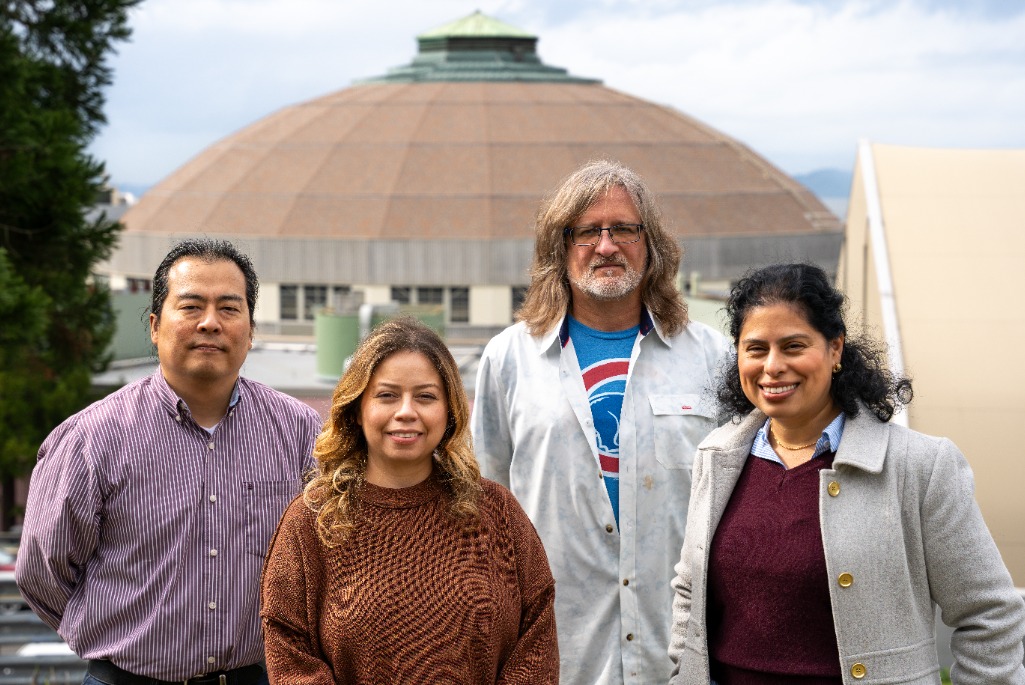
Q. Can you introduce yourself and your role at the Lab?
Karla Arredondo: I’m Karla Arredondo, an Occupational Safety Specialist, Robotics Subject Matter Expert, and a member of the Research Support team within the Environment, Health, and Safety (EHS) Division. I’ve been at the Lab for eight years and manage several programs, including the robotics program, which we’re currently developing to address the changing times and emerging technologies. I mostly hold a support role in this subcommittee and gather information to incorporate into our policies and guidance, which we’ll get into more later. The subcommittee will initially focus on robotics, with plans to broaden its scope to encompass other emerging technologies like AI and autonomous systems. This expansion will include an evaluation of potential risks and current Laboratory infrastructure related to these new areas.
Beatriz Rett: My name is Beatriz Rett, and I’m the Safety Manager for the Joint Genome Institute (JGI). I’ve been at the Lab for nearly eight years, and in the industry for 15. Currently, I manage the division’s environmental, health, and safety programs, including chemical hygiene, waste management, electrical safety, biosafety, ergonomics, and robotic safety. I actually transitioned from a career as a stem cell researcher and a lab manager into the safety field. My daily work involves collaborating with principal investigators (PIs) and researchers to review their proposed research plans, identify hazards, look at controls, and make everyday work safer.
Jeffrey Takakuwa: I’m Jeffrey Takakuwa, and I’ve been at the Lab for over 15 years as a Mechanical Engineer in the Engineering Division. In this role, I’ve supported projects across the laboratory complex, some of which pertain to this subcommittee, including robotics and autonomous processes. In engineering support, we’re often brought in early in a project’s process when we can to identify hazards and suggest or implement mitigations. When you combine that with the excellent safety culture we have at the Lab, that dovetails well into the objectives of this subcommittee.
Though he couldn’t join the interview, another integral subcommittee member is James Nasiatka, an Instrumentation Engineer working in the Photon Science Group at the Advanced Light Source (ALS). His background is in developing and deploying new experimental systems for ALS. He has experience developing safety and operations protocols and practical hands-on experience in successfully bringing developmental projects from inception to completion.
Q. Can you share why and how the Robotics & Emerging Technologies Subcommittee was formed? What motivated its creation?
Karla: The subcommittee was formed following a report that examined how we could enhance our processes at the Lab. Several recommendations were made from there, including looking at emerging technologies and robotics. That’s when we decided to create a subcommittee to focus on those topics specifically. Jeff was the perfect person for the chair because of his vast industry knowledge and experience. Beatriz and I bring practical experience from working directly in a lab environment, which gives us an understanding of how PIs and researchers operate and the safety aspects to consider.
The primary goal of this subcommittee is to bridge the gap between research and safety. It currently functions as a working group composed of programmers, engineers, Division Safety Coordinators (DSC), and representatives from EHS, Security & Emergency Services (SES), Facilities, and IT. It’s a true collaboration between users and operations.
In addition to hazards to personnel, the increase in adoption of these emerging technologies can create other risks as well. To continue our scientific mission, we also need to address risks to samples, equipment, and infrastructure. This subcommittee will also help identify these institutional risks and mitigations.
Q. What specific projects or initiatives is the subcommittee currently working on?
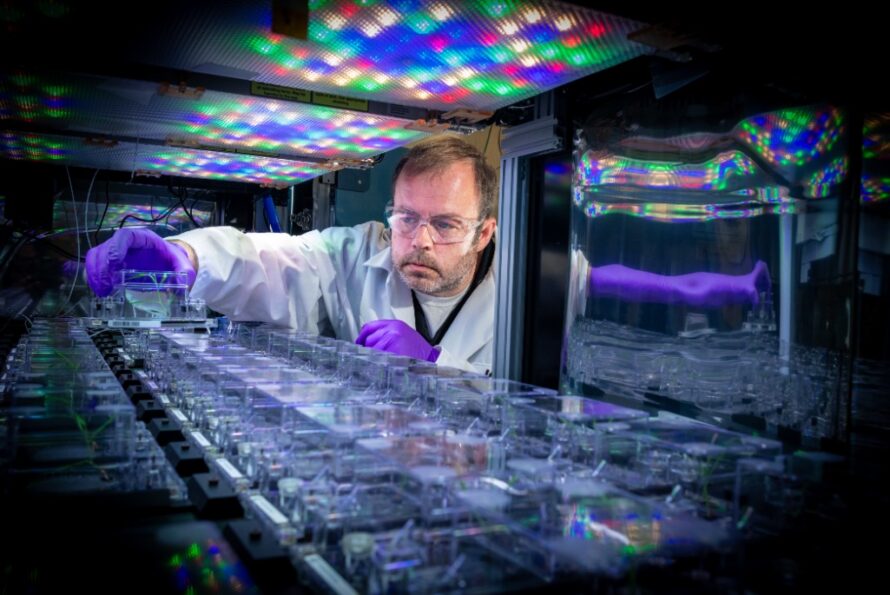
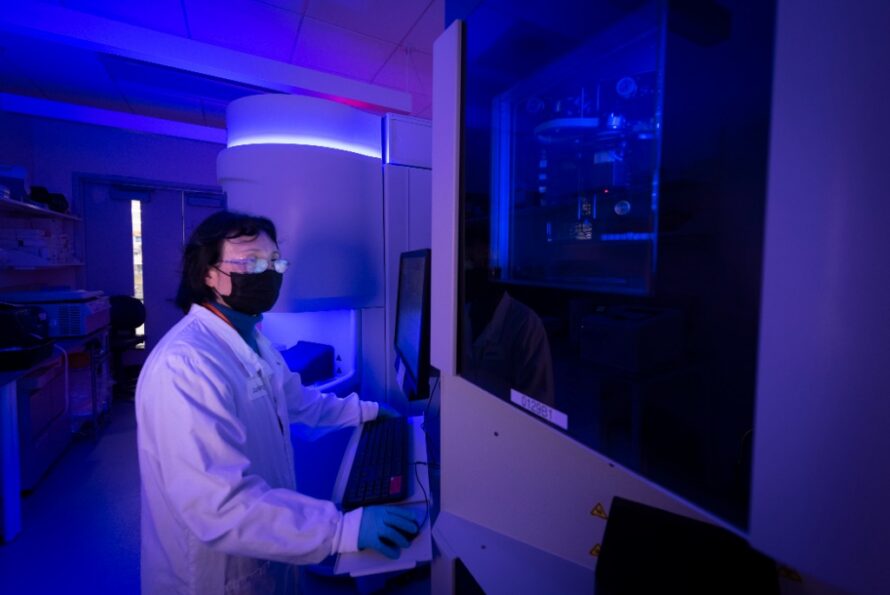
Beatriz: We are focused on several key projects, primarily focused on developing a comprehensive safety framework for robotics and autonomous systems at the Lab. We’re currently developing a robotics risk assessment and a Lab robotics safety policy. The plan is to go from robotics to other technologies, as Karla mentioned.
Q. What goals or milestones is the committee focusing on this year?
Jeffrey: We are focusing initially on the robotic sector element. We plan to use that as an example to guide our approach to other emerging technologies, including current unsupervised operations, AI, and cybersecurity. Though we understand there’s overlap in these topics, we need to isolate a specific area, establish clear deliverables, and conduct an in-depth analysis to make meaningful progress. Once we’ve completed a few of these analyses, our umbrella goal is to evaluate how many risks and appropriate mitigations can be captured, or are already addressed, in our existing robust systems.
This involves a fundamental question: do our existing systems need to be fine-tuned, or do new processes need to be developed to mitigate these hazards? It’s challenging to answer that question outright. By starting with specific examples, we can better inform that broader discussion. This is essential because these findings will eventually inform our policies and how we actually mitigate these hazards as they emerge.
Q. How does your committee support the Lab’s broader mission?
Beatriz: Our goal is to ensure our researchers can work in a safe environment that allows them to be productive and reach their scientific goals. Having a framework, especially in robotics, will provide them the structure and guidance necessary to plan for safe work using new technologies.
Jeffrey: This is wholly consistent with how the Lab operates safely now in bringing science solutions to the world. This subcommittee was formed to proactively discuss and examine the hazards associated with these new technologies. The rest of it then falls within our standard approaches, like Integrated Safety Management (ISM). The only difference is that these technologies may present new hazards that are mitigated by new controls. This is also in the context of science being performed. We recognize the necessity of this research, as it is central to our mission. Therefore, the core objective is to determine what is needed to carry out the work safely.
Karla: To echo Beatriz and Jeff, we are creating a consistent safety oversight of robotics and emerging technologies, standardizing these risks, capturing the training, centralizing the data, and more. This is just the start. Once these policies and recommendations are developed, they will become integrated into the existing processes to enhance safety across the Lab.
Q. What is the best way for individuals to contact the committee?
Jeffrey: For questions or comments, please contact us at sac-et@lbl.gov. We also encourage anyone working with equipment in the emerging technologies and robotics categories to reach out, as we want to understand how these tools are currently used or projected for use to plan effective risk mitigations, compare them with existing lab processes, and forecast future needs.
You can also reach out to your Division Safety Coordinators, Safety Reps, or Division Liaisons directly for any questions or concerns. They will forward your inquiries to the appropriate team members.

1 Comment
What an inspiring initiative. Bravi tutti! LBL is a cherished place and addressing the huge changes that experimenters are facing as we move forward requires just this sort of concerted, intelligent effort.